
Drinking coffee is a fundamental part of most people’s mornings, but have you ever sat down to enjoy the sensory experience of traditional Eritrean coffee?
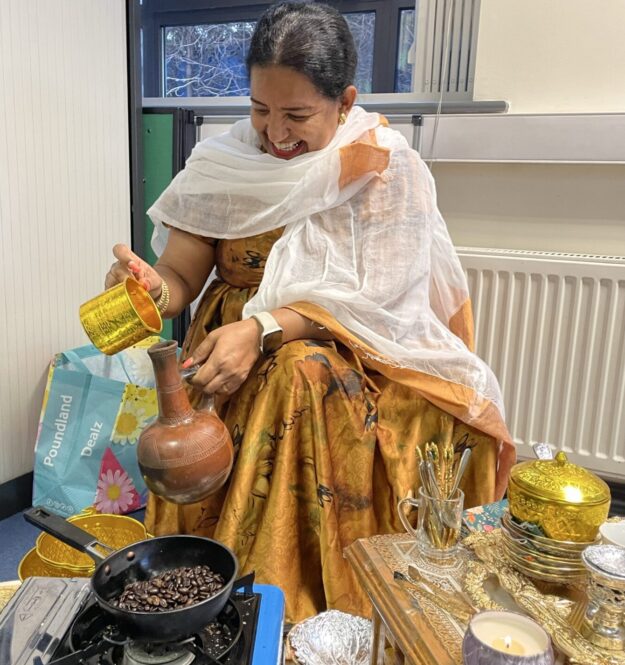
In Eritrea, an east African country which borders Ethiopia, Djibouti and Sudan, preparing and sharing coffee is a much-loved tradition, which foster mum Helen Whitehurst shares with her family and brought to the Long Eaton office to celebrate Black History Month and give us all a taste of her home country.
Fostering, coffee and tradition
Helen and Alan have been fostering with Fosterplus for more than 17 years and have supported four young people from Eritrea with long-term placements in this time, helping them adjust to life in the UK and providing a unique blend of Eritrean and British culture.
Alan supports young people with learning English and British values while Helen speaks Eritrea’s native language Tigrinyan, keeping home traditions alive for young people finding their way in a new country. The Whitehursts stay in touch with all of their former foster children, and today enjoy drinking coffee with their foster son Aki who is very much part of the family.
Understanding Eritrean coffee culture
At home, an Eritrean family will drink coffee to bookend the day.
Traditionally, the eldest daughter roasts the beans and brews the coffee in a jebena, which is a traditional coffee pot with a spout made from clay. Offering your guests coffee is a sign of welcome and respect and it’s not likely you’d enter an Eritrean home without being offered some sort of hot beverage.
The family’s children are inducted into the coffee ritual from a young age. Over the years they watch and learn, and contribute by fanning the freshly roasted beans to give guests a smell of that smoky richness, arranging the cups, or passing around the snacks.
In the Fosterplus office, Helen roasted and grinded the beans before passing them around for everyone to enjoy the beautiful smell, while her daughter, Hermela, was on coffee admin and cake prep.
How to brew Eritrean coffee
Here’s an easy guide to brewing Eritrean coffee if you’ve got all the right bits and pieces:
1. Roasting the beans
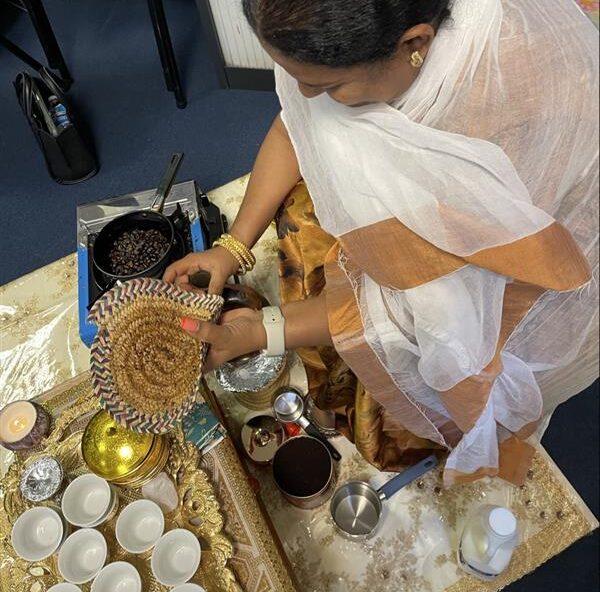
Coffee beans before being roasted are green in colour and very very hard. They need to be roasted in a pan over an open flame to turn them brown and brittle.
2. Grind the beans
A traditional pestle and mortar in Eritrea is called a mukecha, but any pestle and mortar or coffee grinder will do the job.
3. Brew the coffee
First pour the ground beans into the jebena (similar to a tea pot but for coffee) and then add boiling water on top. Sit the jebena on the stove/fire and let it start to brew. You transfer the coffee from the jebena and into another pot a few times to keep the ground coffee mixing with the water and not accumulating at the top of the jebena.
4. Sieve the coffee
Once the coffee has brewed and really intensified, it’s time to get ready to serve it, you need to sieve this coffee so that it’s smooth and nice to drink
5. Serve
Pour the sieved coffee from the jebena into your traditional Eritrean coffee cups, with your preferred mixture of sugar and milk, or if you’re hardcore you can just drink it black.
6. Repeat
Traditionally, Eritrean coffee is served in three rounds, each one reducing in intensity but still an absolute flavour sensation!
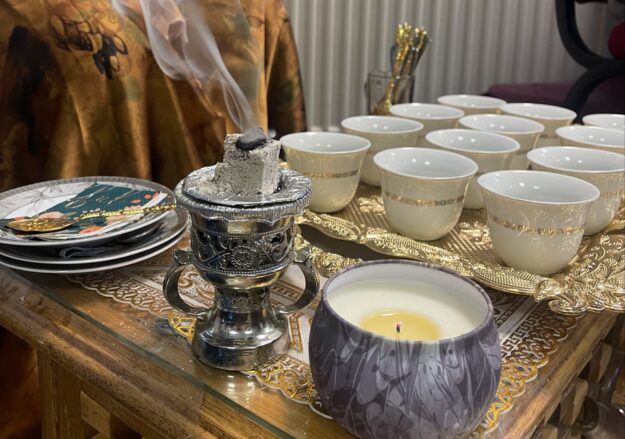
We are very grateful that Helen shares this wonderful part of her culture with us at Fosterplus.
If you’re new to fostering and want to learn more about the role of a foster parent, please get in touch. Call us on 0800 369 8512, or submit an enquiry form and a member of our friendly team will be in touch.