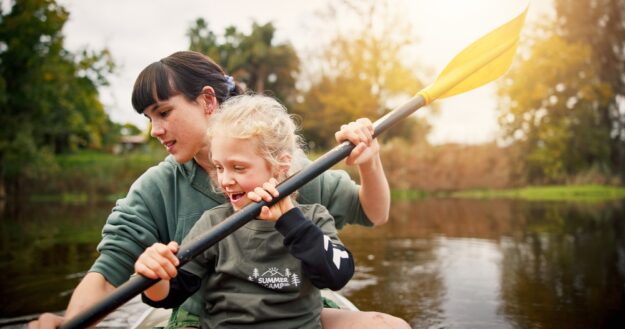
If it’s right for your family and your foster child, going on holiday for the first time is so exciting. You get to see their faces light up as they experience new things, no matter if that’s a staycation in the UK with younger children or somewhere more exotic if you’re fostering teenagers.
But before you start to make concrete plans for your next family holiday, there are a few things that you’ll need to bear in mind when it comes to taking your foster children with you.
From permissions to managing expectations and anxieties, we’re going to take a closer look at everything you need to know about taking your foster children on holiday.

Can you take your foster child on holiday abroad?
Yes, you can take your foster child abroad – if it’s suitable for them – but you’ll need to get permission from either their birth parents or the local authority first. Check the legal order for your foster child to see which permissions you need to secure before you can take them on holiday. You’ll need to make sure that you’ve got proper documentation, such as a passport for your foster child, too.
If your foster child has never been on a holiday with your family before, it’s best to take your foster child on a staycation in the UK first. This can get them used to going on holidays and show them this is an exciting time for all the family, especially if they’re in long-term foster care.
Travelling abroad with your foster child for the first time is exciting, and you can show them new experiences, such as going on a plane, seeing the sea in warmer climates, or trying food local to the country you’re visiting. Remember to stick to the same mealtime and bedtime routines, though, so your foster child still has a sense of stability.
Holidaying abroad checklist
- Passports – make sure you’ve got these to hand. If your foster child doesn’t have a passport, you’ll need to talk to your social worker. They can get a passport for your foster child if they have permission from whoever has parental responsibility. Make sure to allow plenty of time for this to arrive before you book anything.
- Letter of permission – chances are you won’t have to use it, but it’s a good idea to have a letter of permission from the local authority to hand to prove that you’re the children’s foster parents.
- Medicine – if your foster child needs regular medication such as asthma inhalers or insulin, make sure you’ve got plenty to last you the length of your stay abroad. You may also need to have a letter from your foster child’s doctor if their medicine contains a controlled drug. Having a first aid kit to hand could also come in useful.
- Comfort toys – let your foster child choose a soft toy or fidget toy to bring with them for the duration of your holiday. This will give them something comforting from back home to soothe them if there are any wobbly moments.
- Sleeping arrangements – these will need to be carefully considered when you’re booking your holiday. Some children may still need a separate room, while others may be allowed to share. Talk to your supervising social worker to see what they would advise for your circumstances, as they’ll also need to fill out a risk assessment form.
Holidaying in the UK
There are plenty of places here in the UK that make ideal locations for a staycation, and you won’t be too far away from home if you need to change your plans at the last minute and cut your break short. Plus, this is an excellent way to introduce your foster children to holidays if this is all new to them.
Holidays can spark big emotions for some children, as it means being removed from the safety and security of home. We’ve got some top tips below to help you prepare for time away, but it’s important to let your foster child know at each step where you’re going and how long for.
They may need reassurance that they’ll be with you at all times, they won’t be going anywhere on their own, and that they’ll be coming back home with you afterwards. Your supervising social worker can advise you of what other things you’ll need to bear in mind, too.
Staycation top tips
- Permissions – even though you’re not planning on going abroad, you’ll still need to make sure that you’ve got all the right permissions in place before you go on your holiday.
- Start small – before you book those weeklong holidays, it’ll be worth taking your foster child on smaller weekend breaks so that they can get used to going away with you. You can slowly work up to longer breaks or even go abroad.
- Maintaining routines – holidays can cause big emotions to come into play if your foster child feels unsettled. The best way to avoid complicated feelings is to stick to your routines as much as possible, in terms of bedtimes and mealtimes.
- Plan lots of downtime – although holidays are an exciting time, being out of their usual routine, among busy crowds, or in unfamiliar surroundings can take a toll on your foster child’s emotions. Think about what you’re going to do if or when they become dysregulated so that you can help them work through their feelings. Planning lots of downtime into your schedule can also help them when they start to feel overwhelmed.
Preparation is key
Going away from their place of safety, such as your home, can trigger complex feelings for your foster child. Stability and routine are so important for children in care, as this can give them the sense of security they need to overcome past trauma.
Here are some of our top tips to help you prepare your foster children for any holidays you want to take them on in the future:

- Get them involved in the planning process – one of the best ways to manage any anxieties about holidays is to ask your foster child what they would like to do or where they would like to go.
- Take them to see the airport – a couple of times before you’re due to fly out, if you’re going abroad, take your foster children to the airport to watch the planes take off and land. This could help alleviate any nervous feelings about flying.
- Show them videos of where you’re going – letting your foster children watch videos of the hotel, cottage, beaches, and the dining room with food can help to ease any worries they may have.
- Snacks – let your foster children choose snacks to take with them on the journey.
- Toys and activities – allow your foster children to select a soft toy, colouring or puzzle book, and fidget toys to bring with them for the journey.
- Choosing their own cases – give your foster children the option to choose their own cases for the trip, within reason. This can show them that holidays are an exciting thing for them, too.
- Acknowledge their feelings – before you leave for the holiday, make sure you acknowledge any worries or concerns your foster children may have. Remind them that they won’t be on their own. Anywhere you go, you’ll be going together, and they’ll be coming back home with you. This is an exciting time, and they’re bound to have fun, no matter where you go together.
If your foster child finds the whole experience too overwhelming, don’t be afraid to cut your break short. Their welfare is the most important thing, and you wouldn’t want to distress them further if they’d rather be at home with all their comforts.
Chances are that if you give them plenty of time to get used to the idea of going on holiday and allow them to mentally prepare for the experience, you won’t need to come home early. But it’s worth considering cutting things short if your foster child becomes dysregulated often while you’re away. You can work up to longer breaks away over time.
Curious about fostering?
Fostering is one of the most rewarding things you can choose to do. If you want to learn more about the different types of fostering and whether this is the right step for you and your family, we’re here to help.
Simply fill out an enquiry form on our website or give us a ring on 0800 369 8512 to speak to one of our friendly advisors who can talk you through the fostering process in more detail.
Taking that initial first step on your fostering journey could be the best decision you’ve ever made, allowing you to make a difference in a young person’s life.