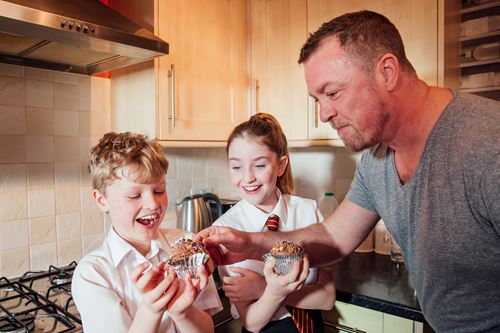
We believe that great outcomes for foster children are made possible by great matches. Matching the right child with the right foster family is crucial for a successful fostering journey. Our matching process is unrivalled in its detail, and we have a proven track record of securing positive, long-lasting foster care placements.
Our referrals team work hard to find the right matches for our foster families and the children in their care. Matching isn’t simply a case of picking a family for the sake of it. A lot of work goes into making a successful match, and positive outcomes for the child are always a priority.
We chatted to the referrals team here at Fosterplus to find out what they do on a day-to-day basis and why their work is so important. We’ve also asked them to bust a few fostering myths surrounding the matching process.
What is matching?
Matching is the process which sees a foster child ‘matched’ with a suitable foster family. This is an essential part of the fostering process and one that we pride ourselves on because of the attention to detail we use to secure long lasting matches.
If a child is in a safe, loving, and stable home, then they’re more likely to have positive outcomes as they grow older. Giving them a safe space allows them to work through their trauma and look towards creating brighter futures for themselves.
A lot of hard work goes into securing matches for both our foster families and the children placed in their care. The referrals team look at a range of factors when deciding how to make the best matches, including location, hobbies, and many more.

What does a typical day look like for the referrals team?
Although our referrals team doesn’t work directly with foster children, they have a direct impact on every single child referred to us. They’re able to offer these children a place of safety, a home, something that makes a tangible difference to their lives. The hard work they do on a day-to-day basis is an emotional rollercoaster, but our team also said that it’s a real honour and a privilege to be part of a child’s journey.
Reading referrals
Our referrals team start the day by looking at the referrals that have come through from local authorities (LAs). Referrals arrive from all LAs across the UK, and these can be varied in terms of the types of foster care they cover. These include emergency placements and moves, short-term care, long-term fostering, and many more.
A referrals officer has to read through a lot of information really quickly to determine whether this is a child we’re able to help. The most important factor for our referrals officers is matching on compatibility. They’ll never make a match purely based on location or the availability of foster families. Everything has to be compatible to ensure a match can go ahead so that a child is able to secure a placement that is stable and safe.
Compatibility is determined by a number of factors, including where the LA want the child to be placed, where they’ll attend school, what hobbies and likes they share with a potential fostering family, if there are children of similar ages within the household, and many more.
The priority for our team is the well-being of the children we’re able to help. Everything we do is child-driven, and the needs and safety of the foster child are paramount.
Securing matches
Once they’ve looked through the referrals and found a suitable foster family, the referrals officers will pass the information on to the family, their supervising social worker, and the Registered Manager for Fosterplus.
If the foster family think they would make a great match for the child, their fostering profile will be passed on to the local authority (LA). A lot of the work that our referrals officers do is in promoting this family to the LA, as they’ll be in competition with at least 100 other independent fostering agencies to secure a match. The social worker for the LA will look at the fostering family’s profile and go through their own matching process to see if they feel they would be the right fit for the foster child.
After a match is secured
The work of a referrals officer doesn’t end once a match has been secured. There may be questions from the foster family which will need to be answered by the LA or the LA’s social worker. Our referrals officers will need to find out which school the foster child will attend, whether they’re allowed contact with their birth family, where the local authority wants the child to live, and lots of other different factors.
It’s down to our referrals officers to make a plan surrounding these factors so that the compatible match is able to go ahead. They’ll also discuss with the LA if a bespoke care plan needs to be put in place so that foster parents have the support they need to help the child in their care.
Foster parents will need to meet with the new foster child before they’re able to move into the home as part of the family, and give the foster child a family book so they can get to know each other before the match is completed.
Empowering foster parents
Another important aspect of a referral officer’s job is empowering our foster parents to think outside the box and to be open-minded about what needs they feel they could support. Fostering is a collaborative process, with everyone working together to ensure that the needs of a child can be met.
Referrals officers will listen to a foster parent’s concerns and worries, and work with their supervising social worker to see if there’s any extra support we can put in place, or if there’s any training courses on our learning platform, Learnative, that can help.
Opening your home to a child you don’t know can seem like a daunting thing, but it’s important to remember that it will be equally, if not more, daunting for the foster child.
Making a difference
At Fosterplus the welfare of each child is at the heart of what we do. It’s not about money, stats, or figures – everything we do is about securing positive outcomes for the children in our care. On average, Fosterplus places between 50 and 70 children a month, and that’s all down to the hard work of the referrals team.
One of the team members described thinking of their results visually. If they’ve saved ten children in a week, that would be a minibus full of children. Or if they’ve had a really successful week, it would be a whole classroom full of children.
Sometimes our referrals officers might get to meet the children they’ve helped through staff open invitations to fun days held for our foster families. Seeing for themselves how a foster child is thriving can bring a tear to their eyes and reaffirm the hard work that has gone into changing that child’s life.
Busting the fostering matching process myths
We asked our referrals team to bust some myths about the fostering process, and these are a few that they wanted to clear up for any prospective foster parents.
1. Compatibility is paramount
We’ve touched on this myth a little above, but the matching process isn’t based on the availability of our foster parents. It’s not a case of putting two children in a home because there are two beds available, or a child requires a placement in a certain location where we have a foster parent.
It’s about creating safe, compatible matches. We want everyone involved to have a positive experience, and we want longevity for the child, as well as safety and security for them. We’ll often talk to the local authority to see if there’s any extra support that needs to be put in place and try to help our foster parents where we can.
When our referrals team meet our foster parents, they’ll ask them about what behaviours they feel they can support, but also about their likes, interests, and what they enjoy doing in their spare time. This is important because if a foster family feel they can support a child with ADHD but like to stay inside a lot, and the child prefers to spend time outside, they’re not going to be compatible with each other.
The last thing we want is for a match to break down, as this will be traumatic for the foster child, and foster parents may feel like they’ve failed. So it’s important to us that the match is right for everyone before it goes ahead.
2. Foster children are going to have trauma
Another myth that our referrals team wanted to bust is that foster children won’t have trauma or come with behaviours associated with that trauma. Each child who requires a fostering placement is going to be exceptionally traumatised because of the things they’ve experienced.
There may have been a build up of factors that have led to a child being removed from their parents, and that separation in itself is a trauma. Or there could be other sad circumstances that led them to being in care. It’s important to remember that these children have lost the life they’ve always known, which is traumatic, and will come with behaviours that reflect that trauma.
We teach foster parents how to take a trauma-informed approach, looking beyond a child’s behaviour to understand what’s really going on. What has happened in their past to dysregulate them? What can you do to help calm them down and understand why they react in a certain way?
Our referrals officers pointed out that a foster child will often be six to seven months into a placement before behaviours start to appear. They encourage foster parents not to be scared by this, as this is a good thing. This is proof that you’re making the child feel safe; they trust you enough to hold their trauma, and you’re doing everything right.
3. Approach fostering with an open mind
Our referrals officers encourage foster parents to approach the fostering process with an open mind and not to stereotype certain behaviours. For example, if we learn a child has ADHD, we might assume that they’re an individual with high energy who struggles to concentrate.
Part of their role sees the referrals team working with our foster parents and their supervising social worker to persuade them to be flexible with what they feel able to support. If they’re nervous about supporting a child with ADHD, our referrals officers will ask them why that is and if there’s anything we can do to support their learning. This collaborative working is essential, as is open communication to make sure everyone is on the same page.
Another factor our referrals officers want foster parents to consider is what someone would have written about you when you were a child. If they noted down every time you lost your temper, lashed out at those nearest to you, every negative thing that you had done, what would someone think if they looked at that referral? We shouldn’t judge someone based on what a piece of paper says, as there is often a lot more to learn behind the behaviours.
No question is a silly question. If you’re unsure about anything, ask our referral officers and they’ll try their best to help.
4. Finding the right match may take time
One of the common misconceptions around fostering is that a foster family will be able to find a match straightaway. While sometimes things can happen really quickly, and it’s great that you’re able to support a child early on in your fostering journey, most matches can take time to get right.
That’s because our referrals officers want to make sure that they’ve got the match right and that your home is the best place for the foster child. There are a lot of factors that they need to consider first, such as if there are already children in the home or if there are any pets, too.
The match has to be right for everyone involved so that they can each have positive outcomes from their fostering journeys.
Are you curious about fostering?
Do you want to find out more about becoming a foster family and how you could make a difference in a vulnerable child’s life? Get in touch with our friendly team today by calling us on 0800 369 8512 or filling out an enquiry form on our website for them to get in touch with you. If you’ve got any questions about the fostering assessments or any other aspect of fostering, our team can help answer them. It’s because of matching with incredible people like our foster parents that children are able to look towards brighter futures. Could yours be the loving home that they need?