
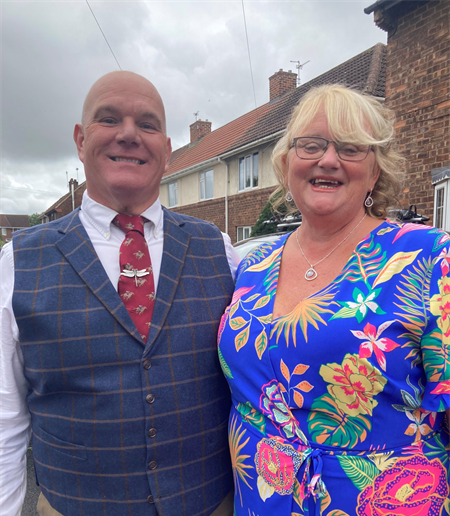
Carl and Jackie began fostering with Fosterplus after their own children had grown up and left home.
Over seven years, they’ve cared for long-term placements and sibling groups, offered short breaks to other foster families, and experienced first-hand how important it is to keep brothers and sisters together and build strong, lasting bonds with the children in their care. Their story shows how life experience, patience and a supportive fostering team can help children feel they truly belong.
Carl and Jackie had raised their own children, watched them grow up and leave home, and suddenly found themselves with a quiet house and a spare bedroom in Doncaster. They weren’t ready to slow down – and they both felt they still had more to give.
“We decided to foster because we wanted to give something back and help somebody out,” Carl explains. With their children grown and grandchildren regularly visiting, they knew they had time, space and patience to offer – they just needed to take the first step.
After researching agencies, they chose Fosterplus and started the journey of becoming a foster parent. The assessment, training and panel felt intense at times, but for Carl and Jackie it was all about making sure fostering would work not only for them, but for the children coming into their family and for their grandchildren too.
Fostering later in life – and using every bit of experience
Carl and Jackie began fostering in their later years, but see that as a strength rather than a barrier. They’ve raised children, welcomed grandchildren and weathered family ups and downs. That experience gives them perspective when things feel tough. With teenagers in particular, Carl finds that shared understanding helps him stay calm and connect.
They chose to foster children aged 4–18 so they could match their energy and lifestyle to the needs of the children. For anyone wondering if they’re “too old” to foster, Carl and Jackie are very clear: if you can offer love, time and stability, age shouldn’t stop you.
Choosing to keep siblings together
After their first long-term placement with an 11-year-old boy, Carl and Jackie were asked to consider something new: fostering a brother and sister who had previously lived with another foster family.
Initially, there were questions about whether the siblings should stay together. Carl’s instinct was immediate and firm – if they were going to foster, they wanted both children.
He knew that for many children in care, their brothers or sisters are the one constant link to their past, their family and their identity. Research shows that placing siblings together can lead to more stable, positive outcomes, wherever it’s safe and appropriate to do so.
So Carl and Jackie said yes – on the condition that the siblings stayed together.
The early days were loud, emotional and full of adjustment. There were slammed doors, stomping up the stairs and plenty of bickering. But as Carl and Jackie got to know each child as an individual, they also began to see how much the two meant to each other.
Their home became a place where sibling relationships were protected and understood, even on the difficult days, showing just how important fostering siblings can be in helping children maintain their identity, connection and sense of belonging.
Belonging, identity and bonds that go both ways
For Carl and Jackie, fostering is as much about belonging as it is about everyday routines.
Over time, they noticed subtle changes. A child who once ran upstairs and slammed doors began staying to talk things through. Another, who first wanted to be introduced as a “foster child”, later chose to simply be seen as one of the grandchildren on a family holiday.
“That’s about belonging,” Jackie reflects. “They’re starting to understand who they are, and where they fit – and we’re part of that picture now.”
Their bond with the children has been tested and strengthened through some deeply personal moments too. When Carl and Jackie lost their adult son, they offered their foster son the chance to go into respite, knowing their home would be a sad and unsettled place for a while.
Instead, he chose to stay. He told them he was part of the family – that he’d been there for the laughs, so he wanted to be there for the tears as well. For Carl and Jackie, that simple decision said everything about the two-way bond they had built.
Small steps that change a child’s world
Some of Carl and Jackie’s favourite memories are simple, ordinary moments that reveal how far a child has come. Their foster daughter is naturally anxious and easily startled by loud noises. On a holiday in France, she initially refused to go into a freshwater lake, choosing instead to “guard the bikes” on the shore. Carl and Jackie didn’t push – they let her set the pace.
Slowly, she edged closer to the water. First paddling at the shoreline, then splashing in the shallows, and finally swimming in the lake, laughing with them as if she’d been doing it all her life. For Jackie, watching that transformation from fear to joy in her own time, was one of their proudest fostering moments.
Another young person, who stayed for just three days, sent a message on her 18th birthday to thank them for their kindness and ask to stay in touch. That short placement left a lasting imprint on all of them, and reinforced the idea that even brief moments of care can make a lifelong difference.
Support, training and a wider network around the family
Carl and Jackie are clear that they don’t do this alone. They see themselves as the “front runners” – the ones there day in, day out – but they know there is a strong team behind them.
They have:
- A supervising social worker who visits regularly and knows the children well
- Children’s social workers who meet with the young people and listen to their views
- Senior staff they can turn to when extra support is needed
- Admin and office staff who are a “font of knowledge” when anything practical crops up
On top of that, they take part in training – both mandatory courses and flexible online or in-person sessions – and value learning from other foster parents over a cup of tea as much as from formal modules. Fosterplus provides a blended programme of training and support so families like Carl and Jackie’s never feel they are managing on their own.
They also offer short breaks (respite), welcoming other foster children into their home for weekends or holidays. It gives other carers a breather, and gives their own foster children the chance to meet children and share experiences.
“We did it together”
When Carl and Jackie think about the future, they imagine their foster children as adults, returning for visits, sharing news of jobs, homes and families of their own.
They hope those young people will look back and say, “We did it together.” That they’ll remember a home where siblings stayed side by side, where they were listened to, where there was space for both laughter and tears – and where they always felt they had a place.
For Carl and Jackie, fostering has been challenging, emotional and eye-opening. It has also been deeply rewarding.
“If you can make a difference for even one child,” Carl says, “it’s worth it.”
You may also find interesting…




Speak to our team
Whether you’re ready to apply or just want to find out more, get in touch with us today
Enquiry
Please make sure you read our terms and conditions because you’re agreeing to them by submitting an enquiry. It’s also worth reading our privacy policy and cookies policy so you understand how we collect and use your personal data. This site is protected by reCAPTCHA and the Google Privacy Policy and Terms of Service apply.
Can’t find what you’re looking for?
By Phone
One of our team is available to talk to you over the phone to answer any of your fostering queries.
By Email
You can get in touch by filling out our online enquiry form with any queries that you may have.
Visit an office
Find contact details for your local office team. We’re always happy for you to pop-in and chat.